Setting up or upgrading a commercial kitchen requires careful planning and selecting appliances that support daily food preparation. Restaurants have different operational needs depending on their menus, kitchen layouts, customer volumes, and available workspace. Reliable Kitchen Equipment Sales solutions help restaurant owners explore suitable commercial appliances, compare essential features, and choose equipment that matches their cooking requirements and business objectives.
Understand Your Commercial Kitchen Requirements
Before purchasing restaurant equipment, it is important to evaluate how your kitchen operates. Consider the type of food being prepared, the number of meals served daily, available floor space, and the number of employees working in the kitchen.
A restaurant specializing in grilled dishes may require different appliances than a bakery, catering facility, or fast-service restaurant. Identifying these requirements helps prevent unnecessary purchases and ensures that selected equipment supports everyday operations.
Creating a list of essential appliances also makes budgeting and kitchen planning more manageable.
Choose Suitable Commercial Cooking Equipment
Cooking appliances are among the most important investments for any restaurant. Commercial ranges, ovens, fryers, grills, and griddles support different preparation techniques and menu requirements.
When selecting cooking equipment, consider heating performance, temperature controls, capacity, energy consumption, and ease of maintenance. Appliances should be capable of handling expected food preparation volumes without taking up unnecessary workspace.
Choosing equipment with practical features can help employees prepare meals efficiently while maintaining consistent cooking routines.
Explore Commercial Refrigeration Options
Refrigeration equipment plays an important role in commercial food storage. Restaurants may require reach-in refrigerators, freezers, undercounter units, or refrigerated preparation tables depending on their operations.
Available storage capacity should match ingredient quantities and daily inventory requirements. Temperature consistency, door configuration, shelving arrangements, and accessibility are also important considerations.
Energy efficiency and maintenance requirements should be reviewed before purchasing. Proper refrigeration planning helps restaurants organize ingredients and maintain appropriate storage conditions.
Select Equipment That Supports Food Preparation
Food preparation appliances can help streamline repetitive kitchen tasks. Commercial mixers, food processors, slicers, blenders, and vegetable preparation machines are useful for restaurants with different production requirements.
The right equipment depends on menu complexity, ingredient quantities, and preparation methods. Smaller establishments may need compact appliances, while high-volume kitchens may require larger-capacity machines.
Consider cleaning requirements, available accessories, safety features, and replacement parts when evaluating different options.
Plan Efficient Dishwashing and Cleaning Areas
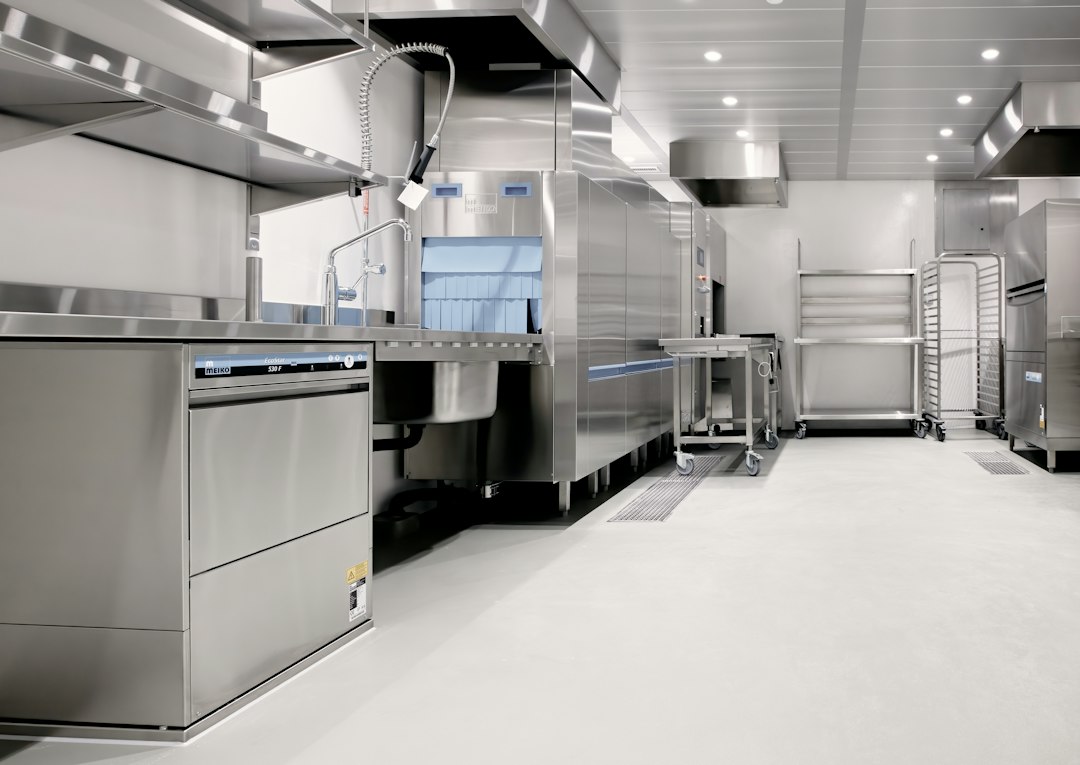
Commercial dishwashing equipment supports the cleaning of plates, cookware, utensils, and food preparation tools. Restaurants can consider undercounter dishwashers, door-type machines, or larger conveyor systems according to their washing volume.
Important features include washing capacity, cycle duration, water consumption, and available installation space. Stainless steel sinks, drainage arrangements, and suitable storage racks should also be considered when planning the washing area.
A properly organized cleaning station helps employees manage used kitchenware during busy service periods.
Consider Kitchen Layout and Equipment Dimensions
Purchasing suitable appliances is only one part of commercial kitchen planning. Equipment must fit the available layout while allowing employees to move safely between preparation, cooking, storage, and washing stations.
Measure doorways, installation spaces, work surfaces, and access routes before making purchasing decisions. Ventilation, electrical connections, plumbing, and gas requirements should also be evaluated.
A practical layout helps reduce unnecessary movement and supports smoother kitchen operations.
Review Quality, Durability, and Maintenance
Commercial equipment must withstand frequent use and demanding working conditions. Construction materials, component quality, warranty coverage, and maintenance requirements are important factors to review.
Stainless steel appliances are commonly selected for their practical cleaning characteristics and suitability for many commercial environments. Buyers should also consider the availability of replacement parts and access to servicing.
Comparing long-term operating costs alongside the initial purchase price helps support informed decisions.
Make Equipment Purchasing More Practical
Selecting commercial restaurant equipment requires balancing performance, capacity, durability, and budget. Restaurant owners should prioritize appliances that directly support their menus and expected workload rather than purchasing unnecessary features.
Careful planning helps create a functional kitchen equipped for daily food preparation. Reviewing equipment specifications and installation requirements before purchasing can also reduce unexpected expenses and operational challenges.